10/22/2025
Broadway Las Vegas
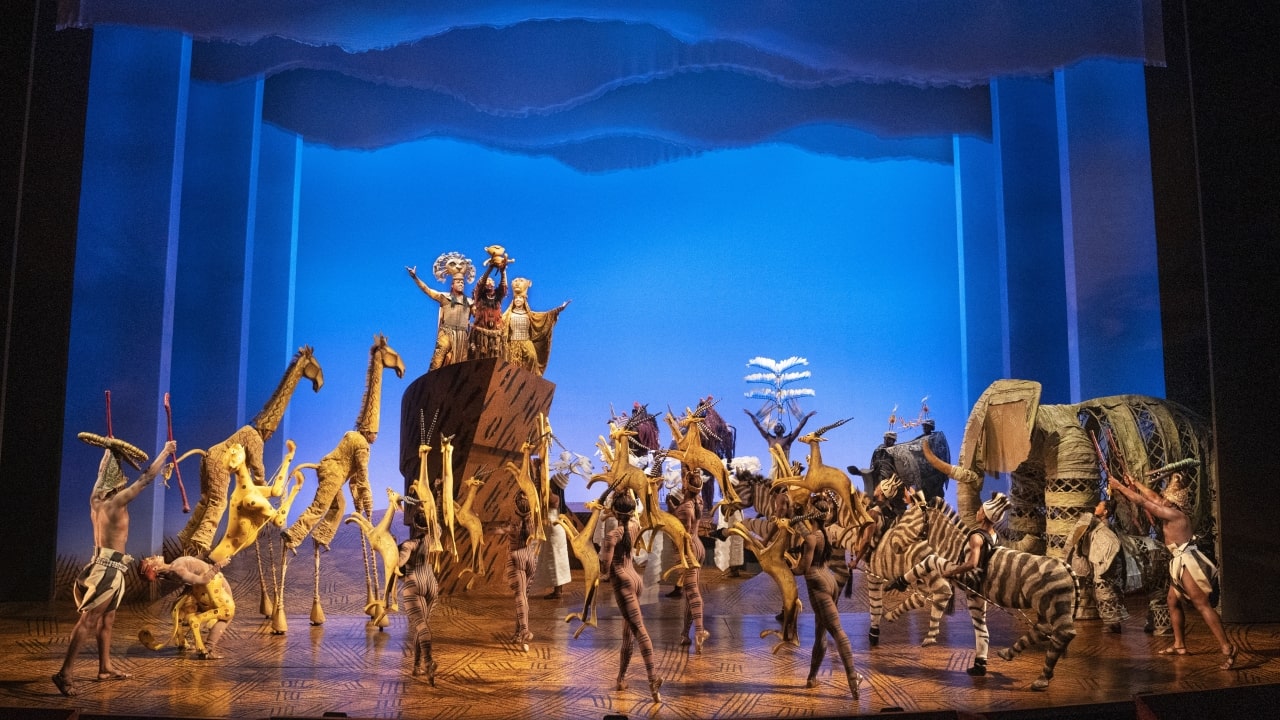
Company of The Lion King on Broadway. The Lion King. Disney. Photo by Matthew Murphy
When Michael Reilly joined the team behind Disney’s The Lion King in 1999, he couldn’t have guessed he’d still be with the show 26 years later. But really, it makes perfect sense, given the high bar the musical’s has set in Reilly area of expertise – puppetry.
“[Lion King puppet designers] Julie Taymor and Michael Curry brought puppetry back to Broadway and made it cool again. And now almost every show you see coming out of Broadway has some puppetry element in it” Reilly tells The Smith Center, where the beloved musical runs November 19-30. “But of course, The Lion King is still very much puppet-centric, and for me, our show is the pinnacle of what this can be.”
As Puppet Supervisor for the touring production of The Lion King, Reilly not only shepherds the show’s 230 puppets around the country and ensures they’re all in working order, he helps train cast members in puppetry, so they can dazzle audiences by bringing each creation to life onstage night after night.
“The reason I stay with it, I think, is the people – teaching the actors the puppetry, seeing how they grow,” Reilly says. “For example, we have a brand new actor who just joined the show and is learning the cheetah, and she’s just taking that puppet and making it her own. That is so rewarding to me.”
All told, The Lion King utilizes eight completely different types of puppets, from “very basic masks to mechanical puppets, where we have literal motors on some of the actors,” Reilly says. “We have body puppets and shadow puppets. We have a full-size elephant in the show. And we have stilt puppets; our giraffes are literally on stilts. We have to teach actors, teach dancers how to walk on stilts, because we don’t hire stilt walkers. We cast singers, dancers and actors, and then we teach them the puppets.”
Actors playing Zazu, the show’s red-billed hornbill bird, must learn to command its mechanized movements … without getting to see them from the audience’s point of view.
“Zazu is such a good example of puppetry in the dark – you have a puppet in your hand, but all you can see is the back of his head, and all the things you do with your fingers and hands are activating things that you cannot see,” Reilly says.
“When we audition for Zazu, one of the last things we do is put this bird in your hand and say, ‘OK, now all the things you just did in your auditions, do them with this puppet.’ And we give them, like, a half-hour crash course on what the bird can do, and then they have to do it in front of Julie Taymor.
“Nick LaMedica, who plays Zazu, has to have an absolute symbiotic relationship with that puppet. He’s been doing it for almost two years now, and he just gets better and better,” Reilly continues. “We practice in front of mirrors and video sometimes, and you just gain the confidence. But it’s probably the most difficult puppet in the show.”
And yet, the team behind The Lion King remains steadfastly committed to the tangible, real-world look and feel of its puppets, at a time when relying on screens and other modern technology might be easier and more cost-effective.
“We can integrate some of the new technologies into these puppets, so they can operate better for the puppeteer, but we don't have to update the aesthetics, or the fact that the cheetah moves her legs with just sticks. That is still very much the same thing,” Reilly says.
“There’s definitely something about seeing an actor puppeteer something onstage that's real, that you can see was made by human hands. None of these things are made by computer. They're all hand-painted and hand-done. There's real beauty in that. I think that's the beauty of puppetry – it’s absolutely timeless.”