12/23/2022
Broadway Las Vegas / Performances and Artists
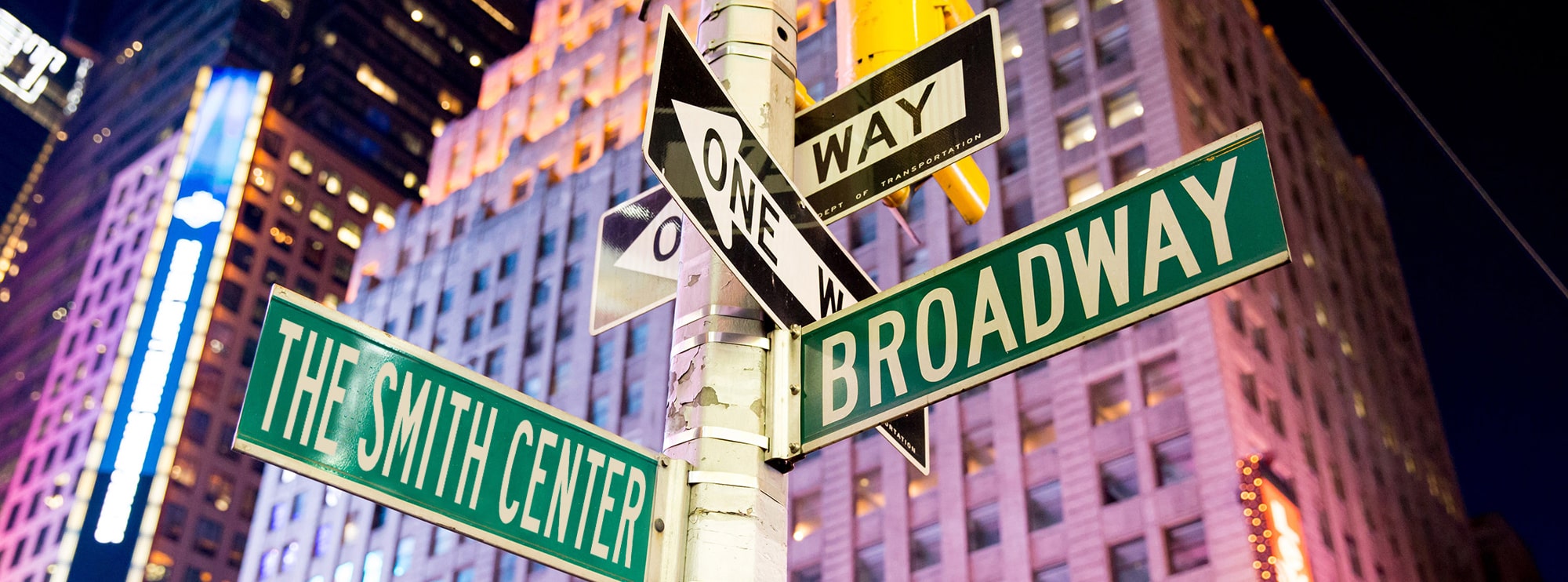
Making Broadway the Longest Road in America
The Smith Center presents touring Broadway productions throughout each year – and many Southern Nevadans look forward to learning the next year’s lineup of shows.
Little do they know, it takes countless steps for these Broadway shows to reach the point of visiting The Smith Center.
And many parts of this elaborate process – including which shows are available to visit The Smith Center at all – depend on what’s occurring on Broadway in New York City.
"Broadway truly serves as the epicenter of the theater industry," says Paul Beard, Smith Center programming advisor. "The shows we can present largely depend on which titles are produced on Broadway, and when."
Confused? Just read on.
New York’s Ties to Las Vegas
What happens on Broadway in New York City doesn’t stay in New York City.
It affects several hundred theaters across the country.
That’s because Broadway serves as the start of a national theater pipeline. The biggest hit shows on Broadway eventually go on tour, traveling to perform at theaters nationwide.
“In order for any business to work, there has to be some kind of distribution mechanism,” explains Kevin McCollum, a prolific Broadway producer behind Tony-winning hits like “SIX,” “The Play That Goes Wrong,” “Something Rotten!” and more. “You wouldn’t make a product and have nowhere to distribute it.”
So, every new show produced on Broadway adds to the pool of touring productions that theaters like The Smith Center can choose to present on their stages.
Because of this, every aspect of how Broadway shows get produced directly impacts which new shows will be available to run at The Smith Center.
“The theaters that exist all around the world (and present touring Broadway shows), especially in the U.S., that’s what makes Broadway the longest street in America,” McCollum says. “Obviously, Las Vegas is a very special part of that street.”
How a Broadway Show Gets Produced
Producing a show and getting it onto a Broadway stage is no mean feat.
This process often takes years – and many shows never make it to Broadway at all.
McCollum chooses to produce a show when he reads a script that builds his excitement and interest, he says.
“I want to see something I’ve never seen before,” he says.
When McCollum finds a story with potential, this launches a lengthy, painstaking process.
Often, the path of producing a Broadway-bound show starts with a simple table reading, where actors gather to read through the book (the script).
This then progresses to the workshop stage, during which the show’s creative team develops and refines most aspects of the production, including the book, the music and lyrics, and the choreography.
Actors are cast to perform parts of the show during the workshop, though they won’t necessarily be the same performers in the production once it’s on stage.
During this workshop phase, a show’s scenes, music and dances might be changed, rewritten, cut and replaced. Often as a show takes shape, it will be performed for potential investors.
“It’s a very messy business, but it’s also very rewarding, because it’s human beings working together,” McCollum says.
This usually follows with presenting the production at a regional theater in a large city such as Chicago. If it proves successful, the show will transfer to an off-Broadway or Broadway theater.
“There’s no formula (to creating a Broadway show), and that’s the beauty of theater,” McCollum says. “It’s not a manufactured item.”
Which Broadway Shows Go on Tour
Many Broadway shows end up going on tour, visiting hundreds of theaters across the country.
But not all do.
“Typically, the audience tells us (what will go on tour),” McCollum says. “If it’s a big hit (on Broadway), usually theater fans and people all across America want to see that show.”
Theater owners and industry organizations also provide feedback on which productions they would prefer to see on the tour, McCollum adds.
And some productions never go on tour simply because no one expects them to draw audiences in theaters nationwide – like serious plays.
“Musicals get distributed to plays almost at a four-to-one ratio,” McCollum says.
Most Americans want to see new Broadway hits within a year or two that the shows have opened on Broadway, he adds, which largely dictates the timing that shows go on tour.
“The public knows what it wants,” McCollum says.
How The Smith Center Books Broadway Shows
The Smith Center starts planning which Broadway shows it will present years in advance.
To do so, the center’s team keeps an eye on every production being produced for Broadway.
“We often will put a hold on the calendar for a show that hasn’t even opened yet (on Broadway),” Beard says. “You look at the title, you look at the concept of the show, you look at the track record and the capabilities of the people producing the show, and make the assessment, ‘does this look like something that, two or three years from now, we will want to see fully realized on our stage?’”
The Smith Center team travels to New York City regularly to see Broadway shows and confirm which they’d like to present on their stages.
“Sometimes, there are shows that we will not book because we look at the show and we say, ‘it’s not good enough,’” Beard notes.
The Smith Center particularly benefits from the influence that its CEO and President Myron Martin wields within the theater industry. His role as a voter for the Tony Awards not only involves him seeing every new Broadway show — familiarizing him with the quality of new productions — but it also helps him build a strong relationship with Broadway producers.
One very important thing helps The Smith Center book hit Broadway shows, Beard adds: the more than 10,000 subscribers to The Smith Center’s Broadway Las Vegas® Series.
“We’re an attractive market, because we have terrific support from our subscription base,” Beard says. “There wouldn’t be a Broadway Series without it.”