9/19/2022
Performances and Artists
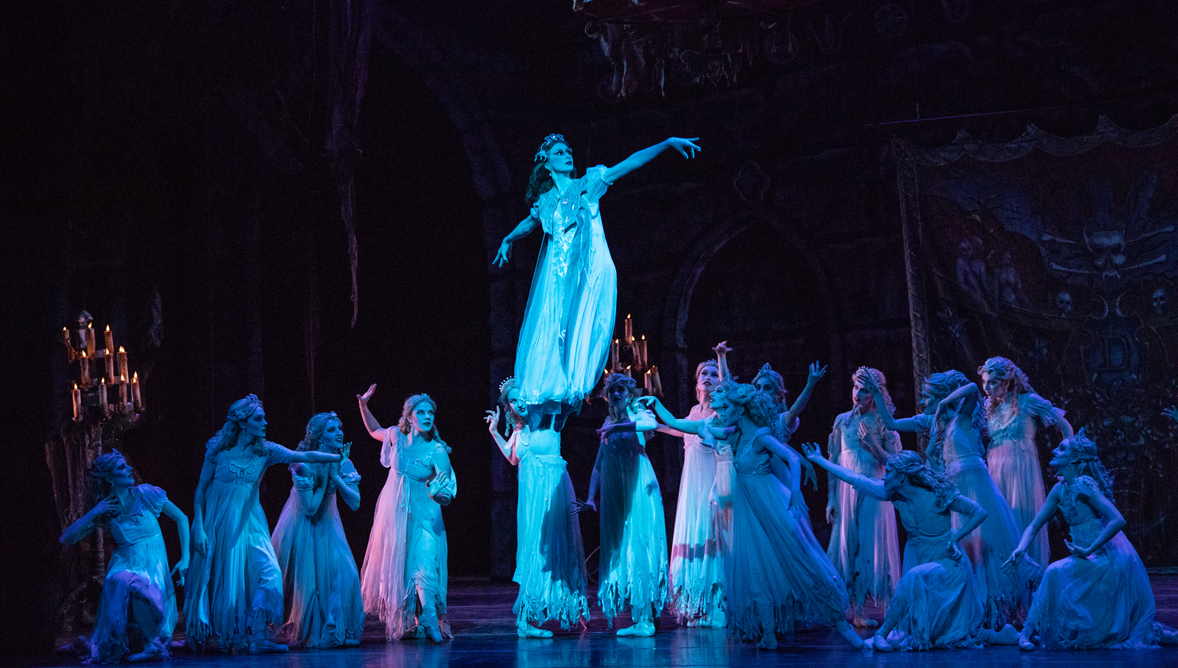
When audiences watch Nevada Ballet Theatre’s (NBT) performances of “Dracula,” they shouldn’t expect a delicate fairytale of tutu-clad princesses, notes répétiteur Dominic Walsh, who staged the production.
Instead, this gripping work by acclaimed choreographer Ben Stevenson portrays Bram Stroker’s chilling tale in a neoclassical style, Walsh says, which rejects whimsical frills and instead centers on expressive, fast-paced movements to give the ballet a contemporary feel.
“(Choreographer Ben Stevenson) is a master at storytelling and creating the feel of a screen, holding the drama together as the viewer gets pulled into the action,” Walsh says.
Of course, this performance still gives audiences plenty of visuals to drink in, such as immense, gothic sets, characters flying above the stage and even a stunning explosion.
“What I appreciate most is the classic, theatrical special effects that are produced by clever staging and lighting,” Walsh says. That’s where the brilliance is, for me.”
No Small Parts
Performing this ballet proves no easy task, Walsh adds, as every role involves physically demanding movement, especially for characters with supernatural powers.
“The dancing itself is very challenging,” Walsh says. “Very tricky partnering techniques are needed, and great stamina for all of the principal roles.”
On top of that, the performers must channel powerful emotions to bring this dramatic story and its dark characters to life.
“Each step must have the voice of the character behind it,” Walsh says.
The ballet’s soloists and the corps de ballet all play important parts in the unfolding of the story, he adds, describing the corps’ role in “Dracula” as “more challenging” than in most ballets.
“There are no small parts in a Ben Stevenson ballet,” Walsh says.
A Story Worth Telling
Regardless of audiences’ familiarity with “Dracula,” Walsh says, they will enjoy this production’s grand storyline with thrilling stagecraft and mesmerizing dance.
“I think sharing our stories is what connects us as a species,” he says. “In theater, when we are transported into a world with characters we care about or are interested by, and the interpreters are committed and the direction and writing is coherent, we can experience the commonality of the human experience.”