6/22/2021
Education and Outreach
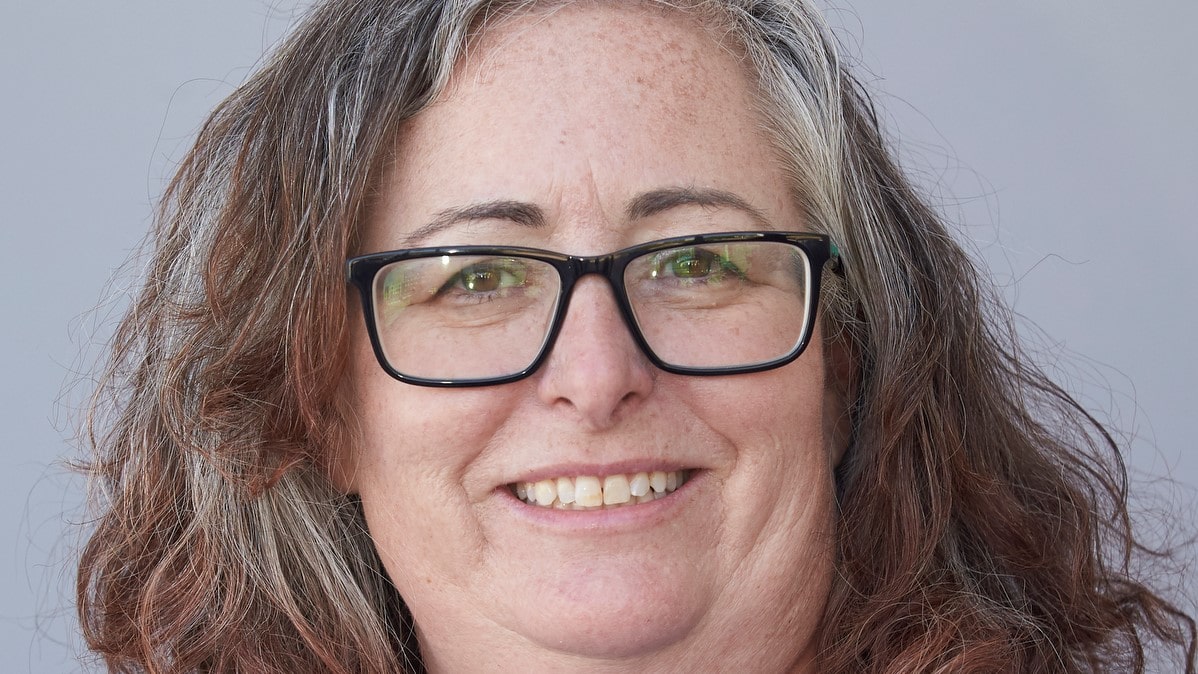
Sarah Cooper decided to become a teacher because of her daughter Chloe.
The young girl struggled with talking, Cooper remembers, and eventually stopped speaking completely — until a program through her New Mexico public school helped the family.
“To see her blossom and speak made me want to have that kind of impact on someone’s life,” says Cooper, a former scientist and now science teacher at Southeast Career Technical Academy (SECTA) in Las Vegas. “Seeing the difference a teacher made for her made me decide to leave the research lab, go back to school and become a science teacher.”
Now Cooper makes this kind of impact on students every day. Her achievements as a teacher include obtaining thousands of dollars in grant funds for student equipment, guiding students to succeed in prominent science fairs, and serving as an advocate for low-income and minority students.
“I never want a student to not reach for the sky because they don’t realize what they are capable of,” Cooper says.
To honor her inspiring efforts, The Smith Center named Cooper one of the top 20 teachers for its sixth-annual Heart of Education Awards, celebrating outstanding Clark County School District teachers. Thanks to the generous support of The Rogers Foundation, she received a $5,000 cash award and a $1,000 donation to her school.
“(I feel) humbled. Honored. Disbelief,” she says.
A Cutting-Edge Classroom
Cooper pursues every grant and donation opportunity to obtain cutting-edge materials for both in and out of the classroom.
“I realized to give my students the hands-on experiences that I wanted them to have in science, I needed more lab materials and equipment,” she explains.
This has resulted in her receiving $3,000 from the Society of Science and the Public to support student research, as well as a $1,500 grant from the American Chemical Society to purchase new lab equipment, predesigned experiments and hands-on models. She further raised $5,000 from DonorsChoose for classroom supplies such as lab glassware, safety equipment, nonfiction books and lab kits.
She also received $2,000 from the Society for Science and the Public to purchase home kits for her students to develop science projects during distance learning.
“The take-home kits and new lab equipment have shocked students,” she says. “Students could not believe they were able to do research with the tools that they now had access to.”
This equipment allowed for impactful projects such as designing water purification systems, using animal cameras to record animal behavior, building models with 3D printers, programming Arduino circuits and more.
“With these tools, students will develop their science and engineering practices and become lifelong, scientifically literate members of society,” she says.
Leading Students to Success
Cooper also takes great pride in the research program she built at her school.
She requires all of her students to conduct a year-long science project or compete in a science fair. To help tackle research challenges, she mentors students before and after school and during lunch.
“Teaching students to think scientifically will help them in whatever path they take,” she says. “I guide them every step of the way and I encourage and suggest project ideas that relate to their programs of study at SECTA.”
Through her efforts, she led 30 students to their first-ever Beal Bank USA Southern Nevada Regional Science & Engineering Fair in 2020. The students brought home $2,000 in awards.
This year, 15 more attended, with five first place wins.
“They are taking a huge risk to go to a competition, and when they see their peers winning and succeeding, it is an amazing experience,” she says.
Her additional successes include guiding a student — who now attends MIT — to the Regeneron International Science and Engineering Fair. She helped another student gain acceptance to the QuestBridge College Prep Scholars Program that starts a path to a four-year college scholarship.
“Students who experience science fairs and do research overwhelmingly state that they did not know they could do science or be good at it, until they did their research projects,” she says. “This growth in confidence and belief in themselves is part of why I do this.”
Just Getting Started
Cooper searches for even more ways to boost students’ success.
A recent grant included her selection as an advocate to work with low-income and minority students, which she takes seriously.
“Students who are low income and minorities need people to believe in them and show them the opportunities that are available to them,” she says. “When they see what is possible, it motivates them, they dream bigger and do better.”
She also continues to build her STEM skills with an Army-funded program that allows her to work with scientists at an Army research lab in Maryland for a month.
“I may never know the impact my work has on students long term,” Cooper says. “But knowing that I have made a difference now through the confidence students gain by researching and speaking about their work is what keeps me striving.”