9/25/2025
Broadway Las Vegas
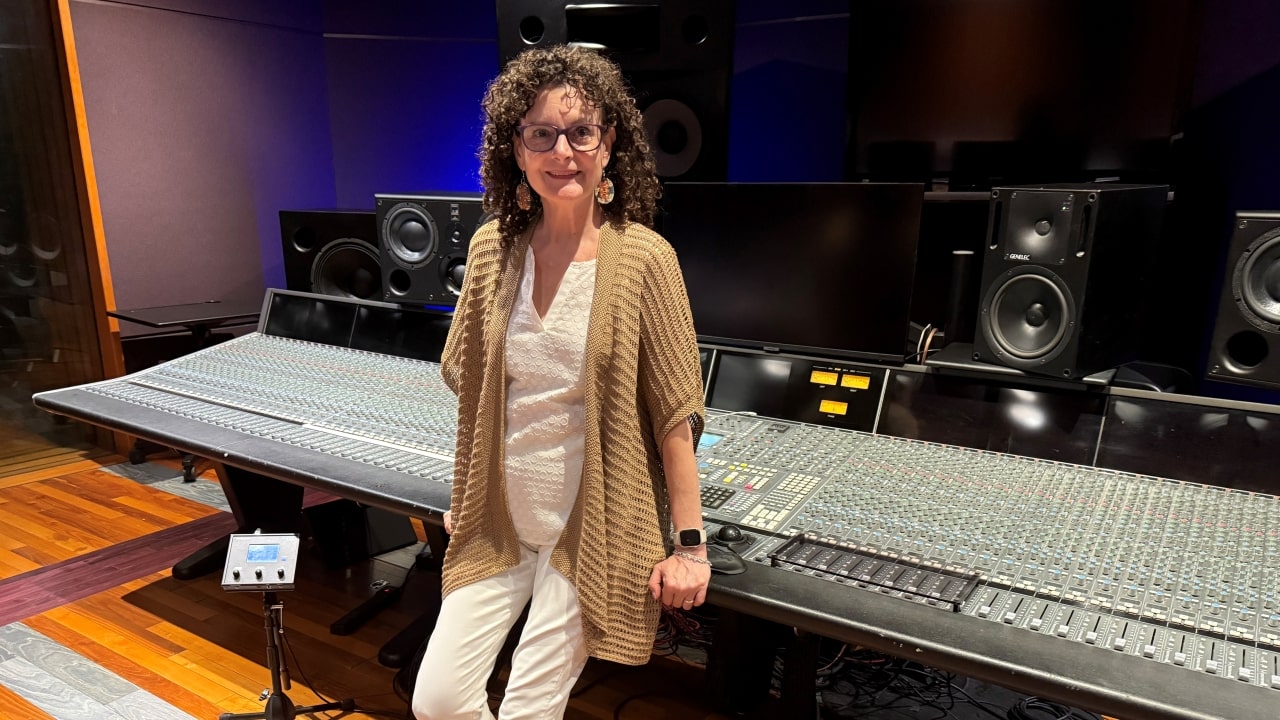
Zoe Thrall At The Hideout Recording Studio
“Part of a producer’s job is to be a psychiatrist.”
That’s how Zoe Thrall, Director of Studio Operations at The Hideout Recording Studio in Henderson, describes one critical aspect of working with famous bands – especially stormy ones like the fictitious 1970s rock group featured in Stereophonic, the Tony Award®-winning Broadway production running at The Smith Center October 21-26.
“Dealing with the personalities is so critical,” Thrall explains. “With a rock band, you’ve typically got several people involved, so you’ve got all that energy, plus they can have their own individual drama going on, with wives and families and life in general. That can create lot of extra pressure inside the studio.”
During her decades at renowned New York City studios Power Station and Hit Factory and then Las Vegas’ acclaimed Studio at the Palms, Thrall has worked with such chart-topping artists as Michael Jackson, The Rolling Stones, Beyoncé, Bruce Springsteen, Mariah Carey, The Killers and Imagine Dragons – to name just a few. In 2021, Thrall joined the team at The Hideout, a state-of-the-art facility housing four separate recording rooms.
In Stereophonic, the band inside the studio stands at a pivotal point in its trajectory – the album being recording could propel the group to superstardom, or the interpersonal drama between the musicians could signal its impending breakup.
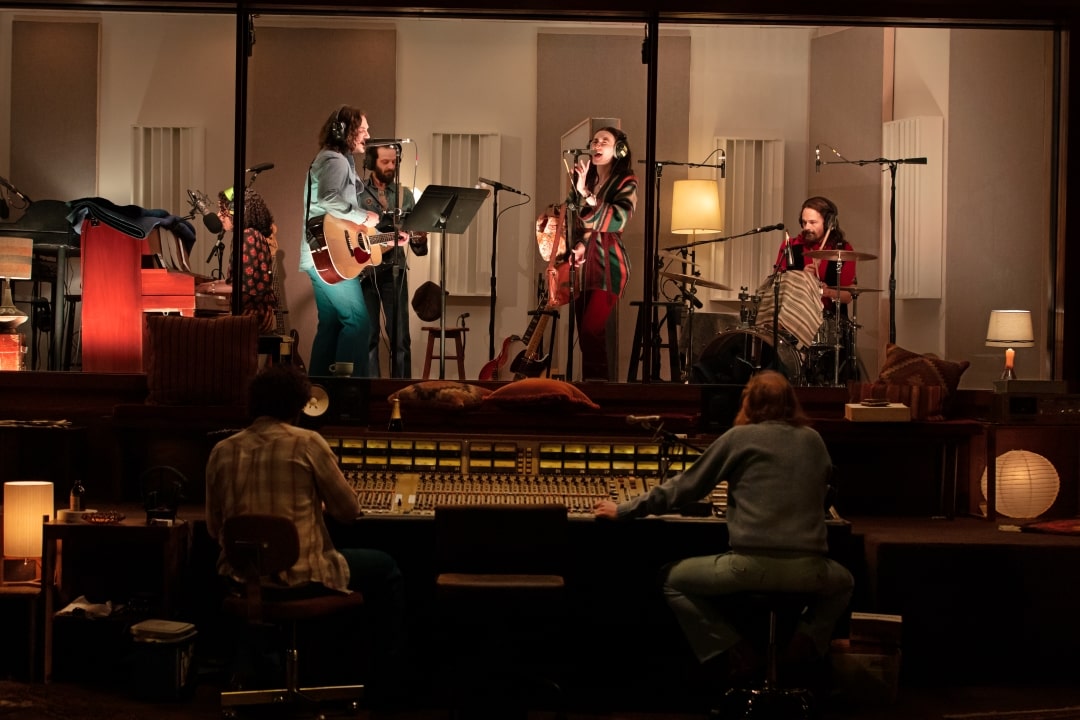
Stereophonic production photo by Julieta Cervantes
That storyline takes Thrall back to an episode from her past. “I'm thinking of one situation with a very famous band. I wasn't producing; I was the studio manager, but I was very close to the producer, and there was friction between the guitarist and the lead singer. They were always competitive – sometimes that can be a good thing, but in this case they were butting heads constantly. The producer got a huge bump on his head, just from the stress of dealing with it, going back and forth, bringing one of them to one corner, talking him down, going into the other room to talk to the other one.
“They got through it and made an amazing record, but it can be very tough, and it’s not unusual at all.”
In Stereophonic, lead vocalist Diana and guitarist Peter are in a long-term relationship, but it’s showing signs of unraveling. Meanwhile, bassist Joan and keyboardist Simon are a married couple within the band, but romantic tension is building between Joan and assistant engineer Reg.
The drama plays out onstage, soundtracked by memorable music composed by Will Butler, renowned for his work with Canadian indie rockers Arcade Fire. His creations recall artists from the era like Elton John and Stevie Wonder, masterfully blending authenticity and emotion.
Can the band at the center of Stereophonic keep its personal demos at bay and focus on completing its masterwork? As Thrall knows full well, it could come down to the folks in the recording room.
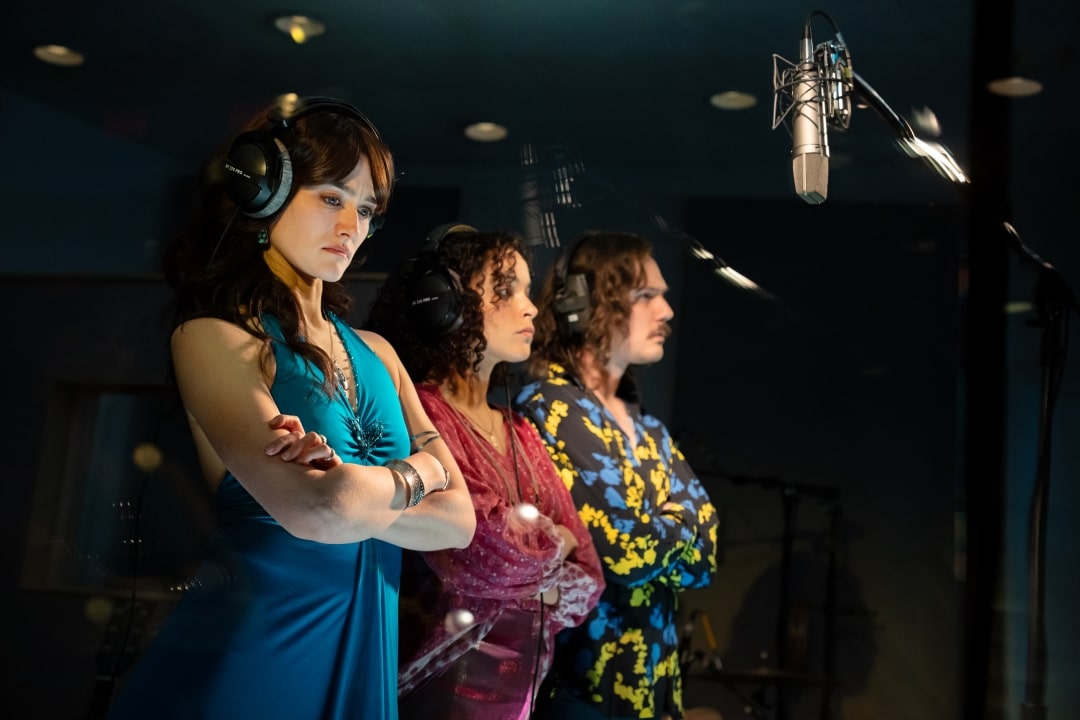
Stereophonic production photo by Julieta Cervantes
“The producer/artist relationship is so important,” she says. “The producer helps the band make any number of musical decisions: What songs are we going to record? What instruments are going to be on this particular song? Are we going to have harmony vocals on it? Is there going to be a solo? If so, what kind of solo? Is it a saxophone, a guitar? The producer works closely with the band to make all those musical decisions.
“Then the engineer facilitates all that,” she continues. “They capture the recording and manipulate the sound so that everything sounds as good as possible. What microphone am I going to use on the voice or on the drum or on the guitar? Do you want to have reverb on the voice? Do you want it to sound brighter? The engineer controls the equipment, captures the music and stores it on behalf of the band and producer.”
And, Thrall says, a great studio team recognizes how critical the human element can be – and prepares for the unexpected.
“When an artist comes into this studio, they're at their most vulnerable,” Thrall says. “And in order for their most creative moments to happen, they have to feel as relaxed as possible. They have to feel safe. And part of my job is to make sure the environment is that for them, to protect them, to make it their space.”