3/26/2021
Education and Outreach
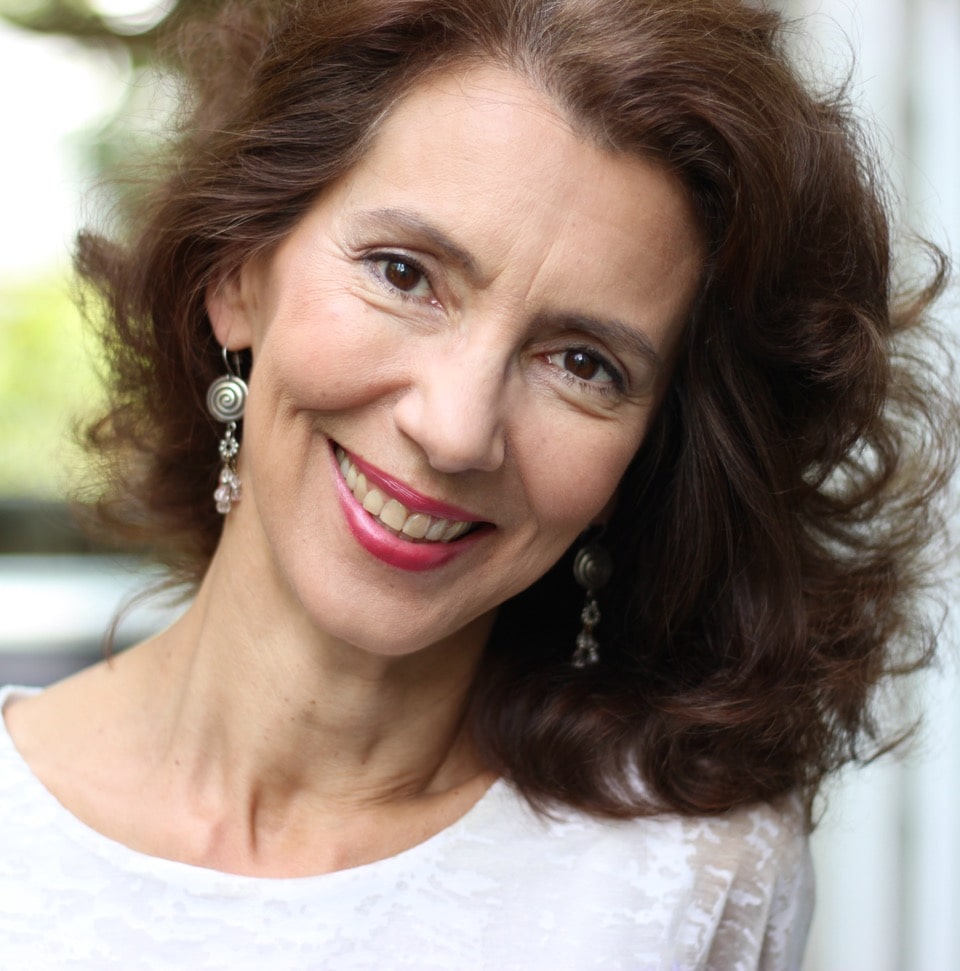 Educators play a vital role in their students’ wellbeing, but the demand on teachers during the shifting status quo of the pandemic remains unprecedented.
That’s why Smith Center educational consultant Mary Hall Surface recently led the center’s second virtual, arts-integration workshop for Clark County School District (CCSD) teachers, “Self-Awareness and Resilience Through Writing and Art.”
Held in February, the Zoom-based professional development workshop aimed to help teachers find inspiration through arts-based exercises, in order to provide students with more structure, certainty and comfort amidst a world in flux.
“These are complicated times,” says Surface, a Kennedy Center teaching artist and internationally recognized playwright and director. “Teachers today are having to discover new ways to help their students navigate through a myriad of unknowns, to which nobody truly has the answers.”
Helping Students Understand and Process Emotions
All children and adults experience a huge range of emotions in response to uncertainty, isolation, fear and disrupted routine, Surface says.
“To have some tools to identify your emotions, and then meet and manage them gives us a stronger sense of control,” says Surface, who specializes in arts integration and theater for families. “Between stimulus and response, there is a space where were have some choice. If we can choose to acknowledge what we are feeling and why, then we can act more intentionally in the face of difficulty.”
During her interactive workshop, Surface invited teachers to use verbal and visual metaphors to process the impact of current events on their lives.
“Metaphors are a direct verbal or visual comparison of one thing to another, and they can help us make sense of the world by giving us a concrete image for things that are hard to sum up,” she says.
To demonstrate, Surface showed the 1992 Sigmar Polke painting “Hope is: Wanting to Pull Clouds,” which depicts a boy roping two clouds and pulling them apart, allowing a small boat to pass across the horizon.
“This particular metaphorical image inspires rich, deep thinking about hope as a belief that the world can change, and that we have the agency to help affect the change,” says Surface.
Surface also demonstrated slow looking, the practice of observing detail over time to move beyond a first impression. This can deepen understanding of self and community, Surface explains, as well as build resilience. It can further strengthen social and emotional skills during times of challenge and change.
“Slow looking requires that you hold back the immediate human urge to interpret — to know the meaning of something, to have it all figured out,” says Surface. “If you can hold back that urge, then you can focus first on the visual information being presented, and discover new connections that open up multiple pathways for perception and understanding.”
Clarity Through Reflective Writing
Writing reflectively can help gain clarity of complex situations, Surface says, and she encourages teachers to try it.
“Writing can be a valuable tool to muse, to question and to make meaning as we look outwardly at something and inwardly at ourselves,” she says. “The act of giving our thoughts and emotions written form asks us to seek clarity in our understanding of ourselves and the world around us, and to respond intentionally to it, thereby building resilience.”
Despite the hardship of the pandemic, Surface says these extraordinary times offer a unique opportunity for reflection.
“We have all been asked to care for one another in extraordinary ways — to put the common good first,” she says. “We have been given the opportunity to treasure what connects us, by losing the opportunity to be together.”
The pandemic has also underscored the value of the arts, Surface adds.
“What has brought us more joy, healing, relief, connection during this time than the arts, virtually or experienced at a distance?” she asks.
Inspiring Hope Through the Arts
Surface offers this workshop for teachers all over the world through acclaimed arts institutions, including the National Gallery of Art and the Smithsonian American Art Museum.
She strives to help participants “see, feel and connect their way into hope,” she says.
“When you slow down and connect to your feelings about the unknown, you discover a way to process them, integrate them and focus them into new understandings and actions that will give you hope,” Surface says.
As a nonprofit, The Smith Center and CCSD have offered teachers quality professional development opportunities focusing on arts integration since 2006.
Click here for more information about The Smith Center's Education and Outreach programs.